'I think Come and Go is unique in Beckett's canon because it's unusually delicate and feminine,' says John Crowley.
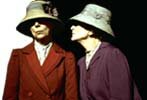
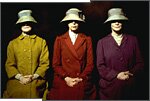
'There's a childlike spirit to the piece which is represented in the bright colours of the costumes the women wear. This is so unusual because Beckett usually doesn't give you colour to work with. I thought that would really lend itself to being filmed.
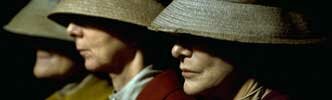
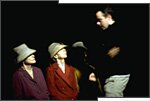
'I wanted to get to the emotional centre of the piece in cinematic terms. I've photographed it to look like an old Victorian coloured photograph. So when each character leaves, she dissolves into darkness like an old photograph fading. I wanted to find a cinematic convention analogous to Beckett's stage directions. He doesn't bother with simple entrances and exits. He never has anyone going off to make a cup of tea. They just disappear. They don't go anywhere they're simply absent.
view video clip
'It can frustrate some people not to know what the secrets the women whisper to each other are, but I don't find it so. I find it very moving. There's a resilience at the heart of the piece. It's about not giving way to the despair of the information that was passed on about the absent person. And yet there's also a salacious interest in another's misfortune that only friends can have. It's the mix of this gossipy interest and the sympathy that they have for each other that is indicative of old friends and is at the centre of the piece.
'There's a great compression and density that Beckett achieves in these incredibly compact pieces. It's phenomenal. I think Come and Go is a perfect piece of writing. It's all of seven minutes but what he compresses into that is three lifetimes full of sadness. Three old women projecting themselves back to the way they used to feel as children dreaming of what it'll be like when they're old. It's almost like a hall of mirrors. How can you hold on to the way you felt then, as you project yourself forward?
'I've never made a film before but my excitement about the project far outweighed the terror that came with it! It's a privilege to work on a great piece of work.
'I wanted to get at the emotional centre of the piece and project it in cinematic terms, which means returning to the basics. I've photographed it to look like an old Victorian coloured photograph. So when each character leaves, instead of walking into darkness, she dissolves into darkness like an old photograph fading. That's the one lift that I gave it towards a photographic convention. I wanted to find a cinematic convention that would be analogous to Beckett's stage directions.'
Back to top